Hard Wax vs Soft Wax: Which One Actually Hurts Less?
Hard wax grips the hair; soft wax grips the skin. That single mechanical difference explains the pain gap, the lifting risk, and why studios use both in one appointment.
The short answer
Hard wax hurts less for most people on most areas — bikini, underarm, face, and anywhere the skin is thin or the hair is coarse. It shrink-wraps each hair and lets go of the skin. Soft wax moves faster across legs and backs, but it bonds to the skin surface itself, and that bond is where the sting comes from.
Hard wax vs soft wax at a glance
| Hard wax | Soft wax | |
|---|---|---|
| Price | Varies by provider and region | Varies by provider and region |
| Speed on a full leg | Slower — worked in palm-sized sections | Faster — thin layer over large sections |
| Pain profile | Lower on thin skin; grips hair, not skin | Sharper; lifts hair plus surface skin cells |
| Second pass on one spot | Generally safe to repeat | Not advised — lifting risk climbs fast |
| Minimum hair length | Roughly a quarter inch | Roughly a quarter inch, tolerates slightly shorter |
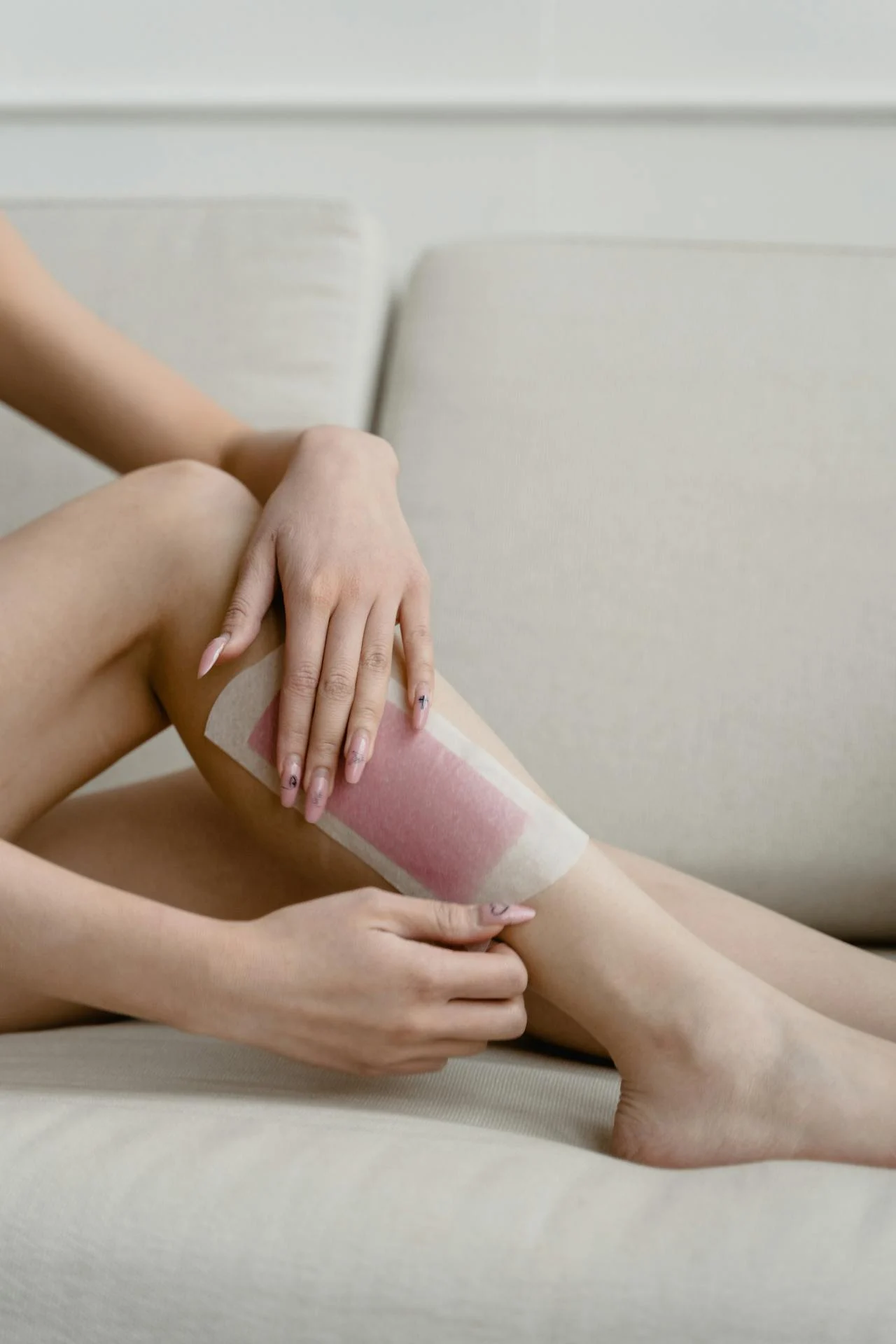
| Removal | Strip-free, by hand | Requires a muslin or pellon strip |
| Best for | Bikini, Brazilian, underarm, face, reactive skin | Legs, arms, back, chest, broad flat planes |
| Main drawback | Slower, more product, snaps if spread too thin | Higher lift risk, ruled out on retinoid-treated skin |
The pain gap is real but it is not enormous, and it narrows on tough, well-conditioned skin. On a first Brazilian, most people describe hard wax as a hot pinch and soft wax as a scrape. Worth knowing before you compare menus: plenty of studios never advertise which medium they use, and a technician may switch between the two inside a single appointment depending on how your skin responds to the first patch. That is a sign of judgement, not inconsistency.
How they actually differ
Hard wax is built on synthetic resins and polymers cut with beeswax. It goes on warm and deliberately thick, then cools into a flexible plate over about fifteen to thirty seconds. While it cools it contracts, closing around every hair shaft inside the patch. The bond it forms is mechanical and it is aimed at the hair. When the technician lifts an edge and flicks the patch back against itself, parallel to the skin rather than up and away, the hairs travel with the plate and the living skin underneath is barely disturbed.
Soft wax is a rosin-and-oil formula spread paper-thin with a spatula, and it never sets. Its adhesion is indiscriminate: it sticks to hair and to the stratum corneum with equal enthusiasm. A strip is pressed into it and torn off, and part of what comes away is a layer of dead surface cells. That is why calves look polished after a soft wax and why the same square inch cannot be reworked twice in one appointment without risking a raw patch.
Two practical consequences follow. First, temperature — hard wax is applied close to body heat because it needs to cool to work, while soft wax runs hotter and thinner, and heat alone raises perceived pain on the labia, upper lip, and underarm. Second, medication history matters far more for soft wax. Anyone using tretinoin, adapalene, or a recent chemical peel, or who has finished isotretinoin inside the last six months, should not have soft wax on that area at all; the skin will tear. Hard wax is safer in those situations, though a good technician will still push the appointment back.
What each one costs
No standard national price exists for a hard-wax service versus a soft-wax one, because most studios do not sell wax by type at all. They price by body area — underarm, half leg, Brazilian — and the technician picks the medium that suits the region and your skin that day. A single appointment often uses both: hard wax through the bikini line and soft wax to clear the outer thigh.
Where a difference does show up on the menu, it reflects the studio's cost, not a markup on comfort. Hard wax consumes more product per square inch, eliminates disposable strips, and takes longer to apply, so hard-wax-only studios tend to sit at the higher end of their local market. Ask which wax the studio uses before you book if it matters to you, and expect the answer to vary from one neighborhood to the next.
Who should choose which
Choose hard wax if you are waxing an intimate area, if you flare into red welts easily, if your hair is coarse and dense, or if this is your first appointment and you want the gentlest possible introduction. Choose it too if you know a technician will need to go back over stubborn patches — that second pass is exactly what soft wax cannot safely do.
Choose soft wax if you are clearing large, forgiving surfaces and want to be out the door quickly: full legs, a back, arms before a trip. It also handles fine, sparse, flat-lying hair better than hard wax does, because a thin film can catch hairs that a contracting resin plate will skip. If you are on any topical retinoid or exfoliating acid, tell the studio and take hard wax instead, or reschedule.
Frequently asked questions
Does hard wax grab short hair better than soft wax?
Can a technician go over the same area twice?
Which one leaves less irritation the next day?
Does numbing cream change the answer?
Why did my hard wax crack instead of pulling clean?
Need a provider in your area?
Browse our directory and book directly with local businesses.
Browse the directoryRelated articles
Sugaring vs Waxing: Which One Actually Hurts Less?
Sugaring is genuinely gentler than soft wax for most people — but hard wax closes the gap. Here's how the two methods differ mechanically, how pain varies by body area, and which one fits your skin, schedule, and tolerance.
Hard Wax vs Soft Wax: Which Fits Your Skin in ?
Hard wax bonds only to hair and runs $40-$80; soft wax exfoliates and runs $30-$60. Here is which fits sensitive skin, fine hair, and the right body areas. Compare estheticians.
Hard Wax vs Soft Wax: Which Belongs on Which Area
Hard wax grips hair, soft wax grips skin — and that one difference decides which areas each belongs on. A technician-level breakdown, including the mistake that lifts skin.