Hard Wax vs Soft Wax: Which Belongs on Which Area
Hard wax grips hair, soft wax grips skin — and that one difference decides which areas each belongs on. A technician-level breakdown, including the mistake that lifts skin.
The short answer
Hard wax belongs on the face, underarms, bikini line and any small area with coarse hair. Soft wax belongs on legs, arms, backs and chests — anywhere you are covering ground. Using either one on the other's territory is the single most common reason a wax appointment goes badly.
Hard wax vs soft wax at a glance
| Hard wax | Soft wax | |
|---|---|---|
| Also called | Stripless wax, film wax, hot wax | Strip wax |
| How it is removed | Hardens into a flexible sheet you lift by an edge | Stays tacky; pulled off with a muslin or paper strip |
| What it grips | Primarily the hair shaft | The hair and the top layer of skin |
| Application thickness | Thick, like frosting, with a raised lip at one end | Thin and translucent, spread almost transparent |
| Working temperature | Warm but generally applied cooler than strip wax | Hotter and more fluid in the pot |
| Coverage speed | Slow — small sections at a time | Fast — long passes down a shin or forearm |
| Fine hair performance | Struggles with very fine, short hair | Catches fine vellus hair well |
| Re-application to the same spot | Tolerable once, in careful hands | Should be avoided entirely |
| Best areas | Brows, upper lip, underarms, bikini, Brazilian | Full legs, arms, back, chest, shoulders |
| Main drawback | Slow and product-heavy on large areas | Lifts skin cells, so irritation risk is higher |
How they actually differ
The distinction is adhesion. Hard wax is formulated with resins and waxes that shrink slightly as they cool, so the product contracts around each hair shaft and grips it mechanically. It bonds to the hair far more than to the skin surface, which is why a technician can lift it without dragging live skin cells along with it. That is the entire reason it is the default for a Brazilian: the skin there is thin, the hair is coarse and multi-directional, and the margin for irritation is small.
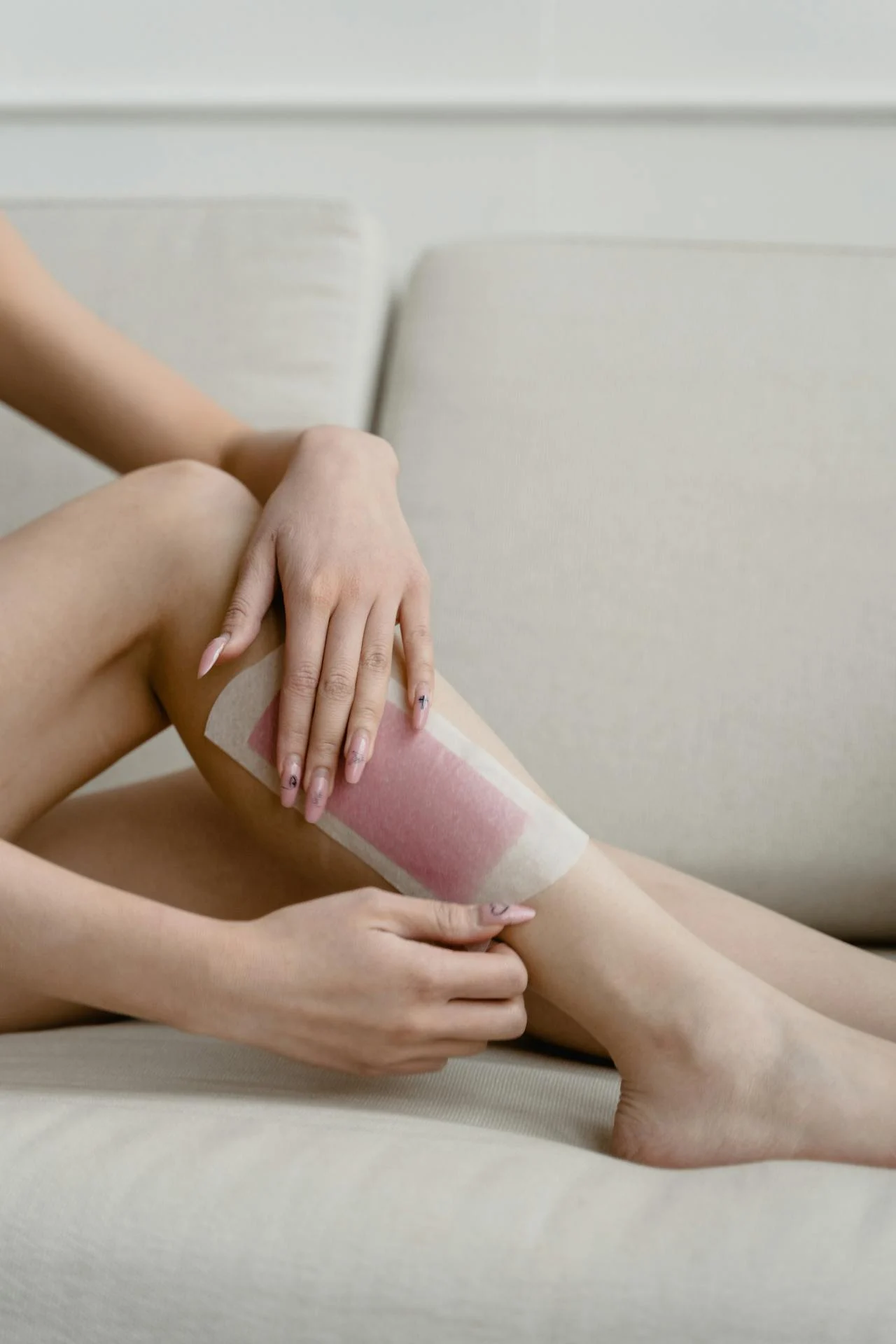
Soft wax works the opposite way. It stays liquid-tacky, spreads into a very thin film, and adheres to everything it touches, including the stratum corneum. A cloth strip pressed into that film and snapped off removes hair and a layer of dead skin cells in the same motion. On a shin, that is genuinely useful — you get a clean, smooth result in a handful of long passes, and the mild exfoliation is a side benefit. On an area that has already been waxed in the same appointment, it is how you get a raw, weeping patch, because there is no dead-cell layer left to sacrifice.
Hair calibre decides the edge cases. Very fine, downy hair is often too slight for hard wax to shrink around convincingly, so a technician who insists on hard wax everywhere will leave stragglers on a forearm. Conversely, coarse bikini hair pulled with strip wax transmits far more force to thin skin, which is why the older salon habit of strip-waxing a bikini line produced so many horror stories. The technician's read on your hair, not a house policy, should decide which pot comes off the shelf.
What each one costs
Prices vary by provider and region, and the wax type is almost never a line item — you are charged by area and time, not by which pot the technician reaches for. That means a hard-wax Brazilian and a soft-wax half leg are not really price-comparable services in the first place.
Two practical notes. Hard wax uses considerably more product per square inch and takes longer per section, so large-area services priced entirely in hard wax do sometimes cost more; a studio that quotes a full back in stripless wax is quoting a longer appointment. And if you are buying for home use, resist the temptation to buy strip wax because the kit looks cheaper per ounce. The cost of a soft-wax burn or a lifted patch of skin on your own face far exceeds the difference.
Who should choose which
Ask for hard wax if you are booking anything below the waistline, anything on the face, or your underarms. Choose it too if you have thin, mature or medicated skin — anyone on retinoids, acids, isotretinoin or hormone therapy that thins the skin should treat strip wax as off the table entirely, and should tell the technician before the appointment rather than after the reaction. Hard wax is also the safer choice for a first-ever wax on a sensitive area, because a nervous client tenses, and a tense client benefits from smaller, more controlled sections.
Ask for soft wax if you are having full legs, arms, a back or a chest done and you care about the appointment ending on time. It clears fine hair that hard wax skips, it leaves a smoother finish across a large flat plane, and the exfoliating effect is welcome on a shin. The one rule that overrides all of this: no area gets soft-waxed twice in the same session. If your technician reaches for a second strip over a patch that has already been stripped, ask them to tweeze the remainder instead.
One practical tell if you are assessing a new studio: watch what the technician does before the wax goes on. Cleansing the area, dusting it with a light powder to absorb residual oil or sweat, and holding the skin taut with the free hand during removal are all basic technique with either wax. Skipping the powder is the most common shortcut, and on soft wax in particular it is the difference between the strip lifting hair and the strip lifting you.
Frequently asked questions
Which one hurts less?
Can hard wax be used everywhere?
How long does hair need to be?
Why did my skin lift after a wax?
Need a provider in your area?
Browse our directory and book directly with local businesses.
Browse the directoryRelated articles
Sugared + Bronzed Sugaring vs Waxing: Which Should You Book?
Sugared + Bronzed works exclusively in sugar paste, so choosing the studio means choosing the method. Here is how sugaring and hard wax differ in grip, direction and skin impact.
Hard Wax vs Soft Wax: Which Fits Your Skin in ?
Hard wax bonds only to hair and runs $40-$80; soft wax exfoliates and runs $30-$60. Here is which fits sensitive skin, fine hair, and the right body areas. Compare estheticians.
Sugaring vs Waxing: Which One Actually Hurts Less?
Sugaring is genuinely gentler than soft wax for most people — but hard wax closes the gap. Here's how the two methods differ mechanically, how pain varies by body area, and which one fits your skin, schedule, and tolerance.