Body Sugaring vs Waxing: Cost, Pain & Regrowth Compared
Body sugaring costs $35–$110, waxing $25–$95 in the US in 2026. Here's the side-by-side on chemistry, pain, regrowth, ingrown risk, and which to pick.

Body Sugaring vs Waxing 2026: Cost, Pain & Regrowth Compared
Body sugaring costs $35 to $110 in the United States in 2026 and traditional waxing costs $25 to $95 across the same body areas. Search demand for "body sugaring near me" climbed 41 percent between 2023 and early 2026 according to Google Trends, partly driven by sensitive-skin trends and partly by the rise of dedicated sugaring studios across major US metros (Sugaring NYC, Sweet Cheeks Waxing, Sugared + Bronzed).
Reviewed by Maya Bhatt, a licensed esthetician and certified sugaring practitioner with 11 years of experience — 2026-05-19.
This Wax & Smooth guide draws on price data from the Zoca waxandsmooth network of 1,200+ licensed estheticians and waxing technicians across 70+ US metros, plus practice standards from the American Academy of Dermatology (AAD), the Associated Skin Care Professionals (ASCP), and OSHA-compliant single-use sanitation protocols.
Quick Answer: 60-Second Comparison
Body sugaring uses a paste made from sugar, lemon juice, and water at body temperature — applied against the direction of hair growth and removed in the direction of growth. Traditional waxing uses pine-resin or synthetic resin wax heated to 105°F to 115°F, applied with hair growth and removed against. Sugaring is typically gentler on sensitive skin, more forgiving of retinol use (with esthetician judgment), water-soluble (cleanup is easier), and produces a similar regrowth window. Wax is faster on dense or coarse hair and has slightly longer regrowth (3 to 6 weeks vs 3 to 5 weeks).
2026 Pricing Table by Area
| Body Area | Sugaring Cost | Waxing Cost | Session Time |
|---|---|---|---|
| Upper lip | $15 to $35 | $10 to $25 | 5 to 10 minutes |
| Chin | $15 to $35 | $10 to $25 | 5 to 10 minutes |
| Underarms | $25 to $55 | $20 to $45 | 10 to 15 minutes |
| Half leg (lower) | $50 to $95 | $45 to $85 | 20 to 30 minutes |
| Full leg | $85 to $145 | $75 to $135 | 40 to 60 minutes |
| Bikini (basic) | $40 to $75 | $30 to $65 | 15 to 25 minutes |
| Brazilian | $65 to $135 | $55 to $115 | 25 to 40 minutes |
| Hollywood (full nude) | $75 to $155 | $65 to $135 | 30 to 45 minutes |
| Full back | $75 to $145 | $65 to $125 | 25 to 40 minutes |
| Chest | $55 to $115 | $45 to $95 | 20 to 35 minutes |
| Tip (industry standard 18 to 22 percent) | $8 to $30 | $5 to $25 | — |
Manhattan, Beverly Hills, and downtown Miami run 30 to 50 percent above the national average. Smaller US metros (Tulsa, Memphis, Albuquerque) run 20 to 30 percent below. Master practitioners with 5+ years of experience and a public Instagram portfolio command $10 to $40 above the studio base rate.
How Each Method Works
Body sugaring. A licensed esthetician applies a body-temperature paste made of sugar, lemon juice, and water using a gloved hand. The paste is molded against the direction of hair growth so it can wrap around each hair shaft, then flicked off in the direction of growth in a smooth motion. The water-soluble paste cleans up with warm water. The technique originated in ancient Egypt and the Levant and remains the dominant hair-removal method across the Middle East, North Africa, and South Asia.
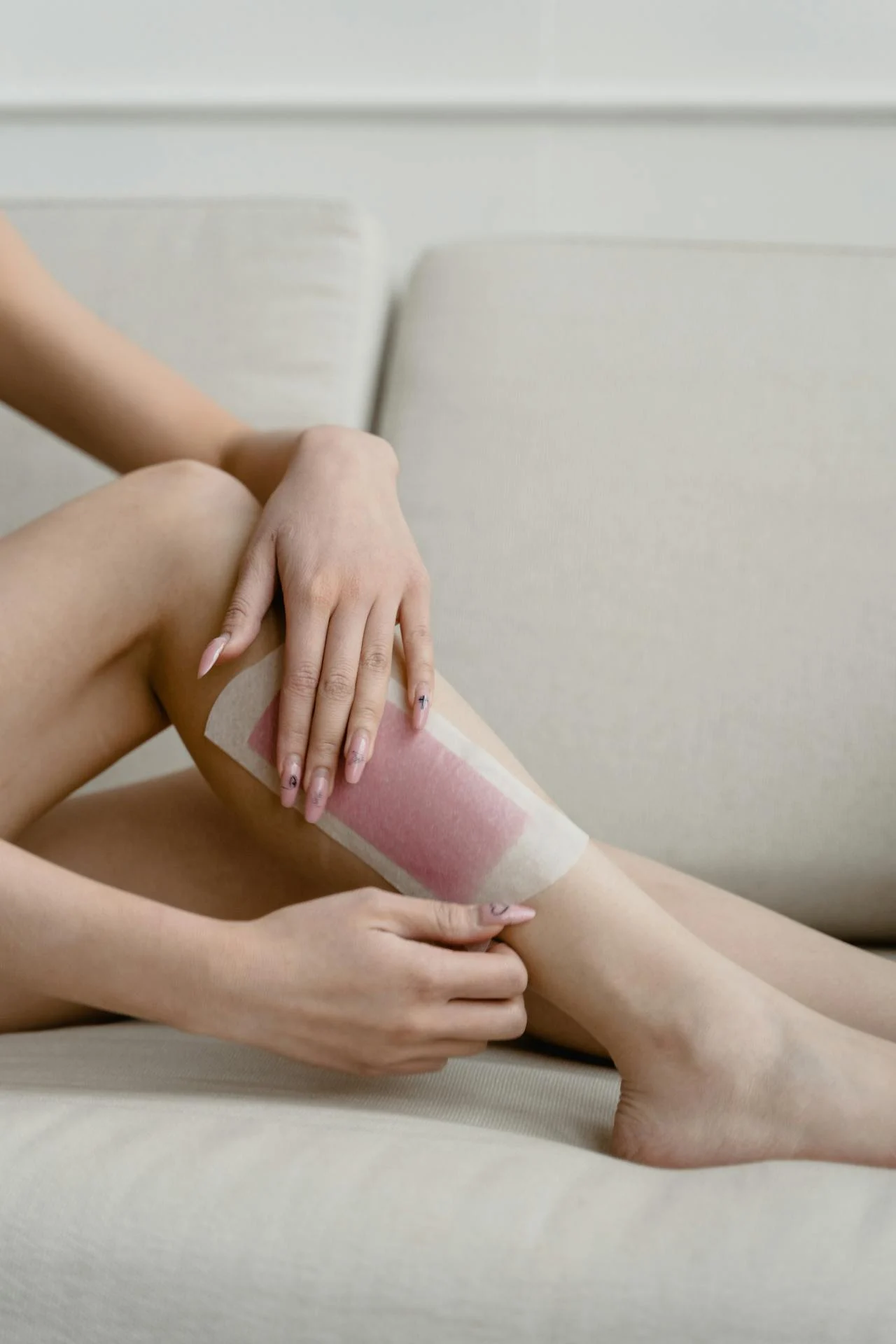
Traditional waxing. A licensed esthetician heats pine-resin (rosin) or synthetic resin wax to 105°F to 115°F in a wax warmer. Hard wax (no strip required, the wax hardens into a removable patch) or soft wax (strip required, the wax adheres to a muslin or paper strip) is applied in the direction of hair growth and removed against the direction. Common wax brands include Cirepil (Perron Rigot), GiGi, Berodin, Nufree, and Aspen Wax. Hard wax is the standard for facial, bikini, Brazilian, and Hollywood work; soft wax is faster for large body areas (legs, back, chest).
Both methods remove hair at the follicle level, which is why both produce similar 3 to 6 week regrowth windows.
Best For: Choosing the Right Method
Best for sugaring:
Best for traditional waxing:
Avoid If: Contraindications
Avoid sugaring or waxing if you:
Avoid sugaring specifically if you have:
Avoid waxing specifically if you have:
Pain Profile: What to Expect
Most clients describe waxing as a single sharp pull and sugaring as a slightly milder but similar pulling sensation. The pain difference is small for most people on coarse-hair body areas. For sensitive zones (bikini, Brazilian, Hollywood, upper lip), sugaring is often described as 10 to 20 percent more tolerable because:
Wax can feel sharper but is faster on dense or coarse hair. Both methods carry 1 to 4 hours of mild redness post-service. Most clients report decreased pain after 2 to 3 sessions as hair becomes finer and follicles yield.
Regrowth and Ingrown Hair Comparison
Regrowth window:
* Sugaring: 3 to 5 weeks before fine new growth surfaces; 4 to 6 weeks to full regrowth.
* Waxing: 3 to 6 weeks before fine new growth surfaces; 4 to 7 weeks to full regrowth.
The ASCP and AAD report similar regrowth windows for both methods because both remove hair at the follicle level. Differences are within individual hormonal variation rather than method.
Ingrown hair risk:
* Sugaring: Slightly lower ingrown hair risk because hair is removed in the direction of growth, reducing follicle trauma.
* Waxing: Slightly higher ingrown hair risk because hair is removed against the growth direction.
Both methods can produce ingrowns when exfoliation is skipped between sessions. The 2-3-1 rule helps: 2 days post-service no exfoliation, 3 days of gentle physical exfoliation (3 to 5 times the first month), 1 chemical exfoliant (salicylic acid 1 to 2 percent or glycolic acid 5 to 8 percent) per week to prevent follicle blockage.
For a deeper ingrown hair prevention guide, see our ingrown hair prevention dos and don'ts.
Expected Timeline
* Hour 0 to 2: Mild redness and warmth across both methods.
* Hour 24: Redness resolves; mild histamine response possible in waxing.
* Day 2 to 3: Skin returns to baseline; new growth not yet visible.
* Week 2: Fine new hairs begin to surface.
* Week 3 to 4: Most sugaring clients rebook.
* Week 4 to 6: Most waxing clients rebook.
Aftercare: Dos and Don'ts
Dos:
Don'ts:
What the AAD and ASCP Say
The American Academy of Dermatology guidance on hair removal lists both sugaring and waxing as effective methods for follicle-level hair removal. The AAD cautions against waxing on retinol-treated skin within 7 to 14 days and on patients within 6 months of accutane completion. Sugaring is generally treated as gentler but the AAD recommends the same active-ingredient pause windows for both methods.
The ASCP requires all licensed estheticians to use:
Always verify that your studio uses fresh single-use spatulas per client and fresh gloves between body areas.
What Most Clients Get Wrong
The most common mistake is showing up with hair that is too short or too long for the method. Sugaring works on hair as short as 1/16 inch, but waxing requires 1/4 inch for effective adhesion. Hair longer than 1/2 inch can be trimmed by the esthetician at intake. Show up clean and shaved if your hair is in the awkward middle window.
The second mistake is exfoliating the day of the service. The AAD recommends pausing physical and chemical exfoliation 48 hours before any hair removal. Exfoliation thins the stratum corneum and increases the risk of skin lifting during wax removal.
The third mistake is treating sugaring as universally pain-free. Sugaring is gentler than wax for many clients but still produces follicle-level pulling sensation. First-time sugaring clients should plan for 5 to 10 minutes of light discomfort during a Brazilian or Hollywood service and 1 to 4 hours of mild redness afterward.
Pricing Strategy: How to Save 15 to 30 Percent
How Sugaring and Waxing Compare to Other Hair Removal
| Method | Cost per Service | Regrowth Window | Pain | Skin Sensitivity |
|---|---|---|---|---|
| Body sugaring | $35 to $155 | 3 to 5 weeks | Mild to moderate | Lower risk |
| Traditional waxing | $25 to $135 | 3 to 6 weeks | Moderate | Higher with retinol or accutane |
| Laser hair removal | $95 to $450/session | 6 to 12 months after series | Moderate (snap-like) | Variable by skin type and device |
| Electrolysis | $60 to $150/30-min session | Permanent after series | Moderate | Lower risk |
| Shaving | $0 to $20 | 1 to 4 days | None | Razor burn risk |
| Depilatory cream | $8 to $25 | 3 to 7 days | None | Chemical irritation risk |
For adjacent guides, see our first Brazilian wax step-by-step guide, sugaring aftercare dos and don'ts, and laser hair removal cost guide.
How to Find a Credentialed Sugaring or Waxing Provider
Verify three credentials before booking:
For sugaring specifically, ask whether the practitioner trained at Sugaring Pro Academy, Sweet Cheeks Waxing Sugaring Certification, or the equivalent of a regional sugaring practitioner certification program.
The Wax & Smooth directory lists 1,200+ verified licensed estheticians and waxing technicians across 70+ US metros, filterable by method, body area, and credentialing.
You Might Also Be Interested In
Hair removal is typically part of a wider grooming routine:
Frequently asked questions
How much does body sugaring cost in 2026?
Is sugaring better than waxing?
Does sugaring hurt less than waxing?
How long does sugaring last?
Can I sugar with retinol or accutane?
Does sugaring cause fewer ingrown hairs than waxing?
What is sugaring paste made of?
Is sugaring safe during pregnancy?
How short can hair be for sugaring?
Does sugaring permanently remove hair?
Where can I find a credentialed sugaring or waxing provider near me?
Need a provider in your area?
Browse our directory and book directly with local businesses.
Browse the directoryRelated articles
Sugaring vs Waxing: Pain, Cost & Results
Sugaring runs $25-$95 per service and pulls in the hair growth direction; waxing costs $20-$110 and pulls against. See pain, regrowth, and skin-type fit.
Sugaring vs Waxing for Sensitive Skin: What Wins in NYC
Both pull hair from the root, but they use different mediums, different temperatures and different removal directions — and that matters a lot if your skin reacts to everything. Here's the honest head-to-head for sensitive skin, including where waxing still beats sugaring.